
God’s Pocket Resort, British Columbia
God’s Pocket is one of the great cold-water diving destinations anywhere. Remote, current-fed, and wildly alive, it offers the kind of density, colour, atmosphere, and photographic reward that keeps serious divers coming back year after year.
◎
God’s Pocket overall score
A field assessment based on photographic opportunity, biodiversity, animal density, reef condition, and overall cold-water diving value.
7/10
There is good macro here, especially when you slow down around rich invertebrate life, nudibranchs, small reef subjects, and texture-heavy cold-water detail. But this destination is more about scale, density, and overall cold-water drama than dedicated critter hunting.
9/10
Walls, kelp, current-fed reef life, giant anemone fields, sponge growth, rockfish, green water, and heavy atmosphere make this a very strong wide-angle destination when visibility and timing line up.
8/10
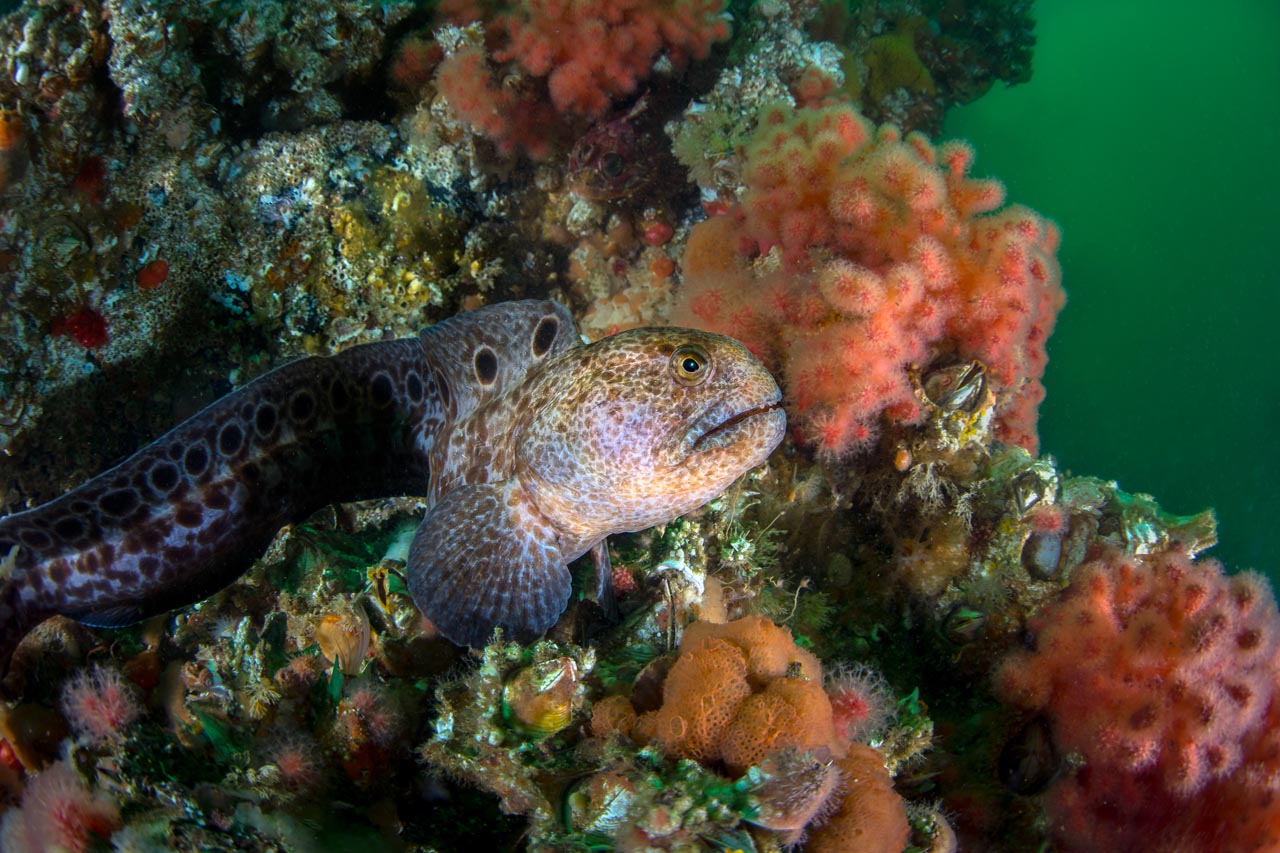
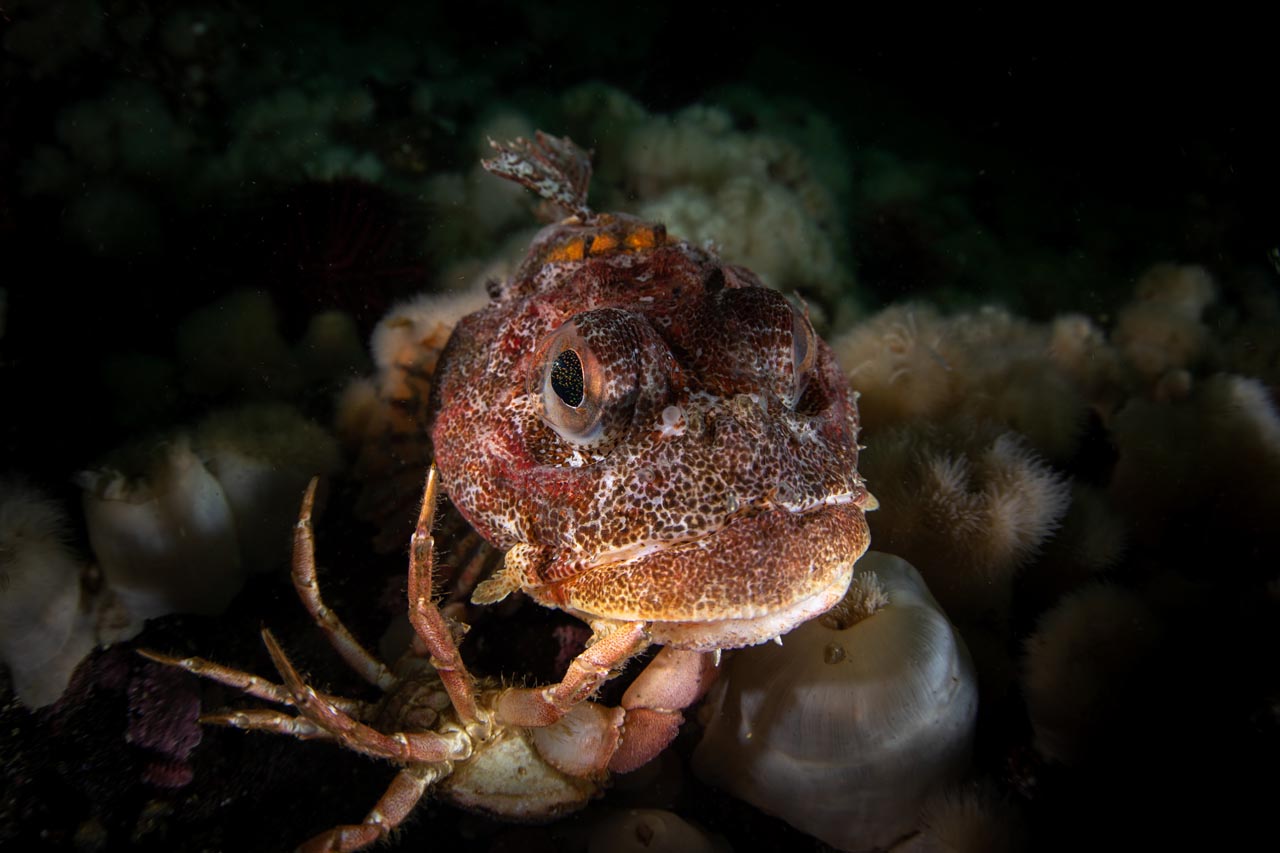
North Vancouver Island delivers a broad mix of reef life, invertebrates, octopus, wolf eels, rockfish, nudibranchs, kelp environments, wall systems, and occasional larger wildlife encounters.
10/10
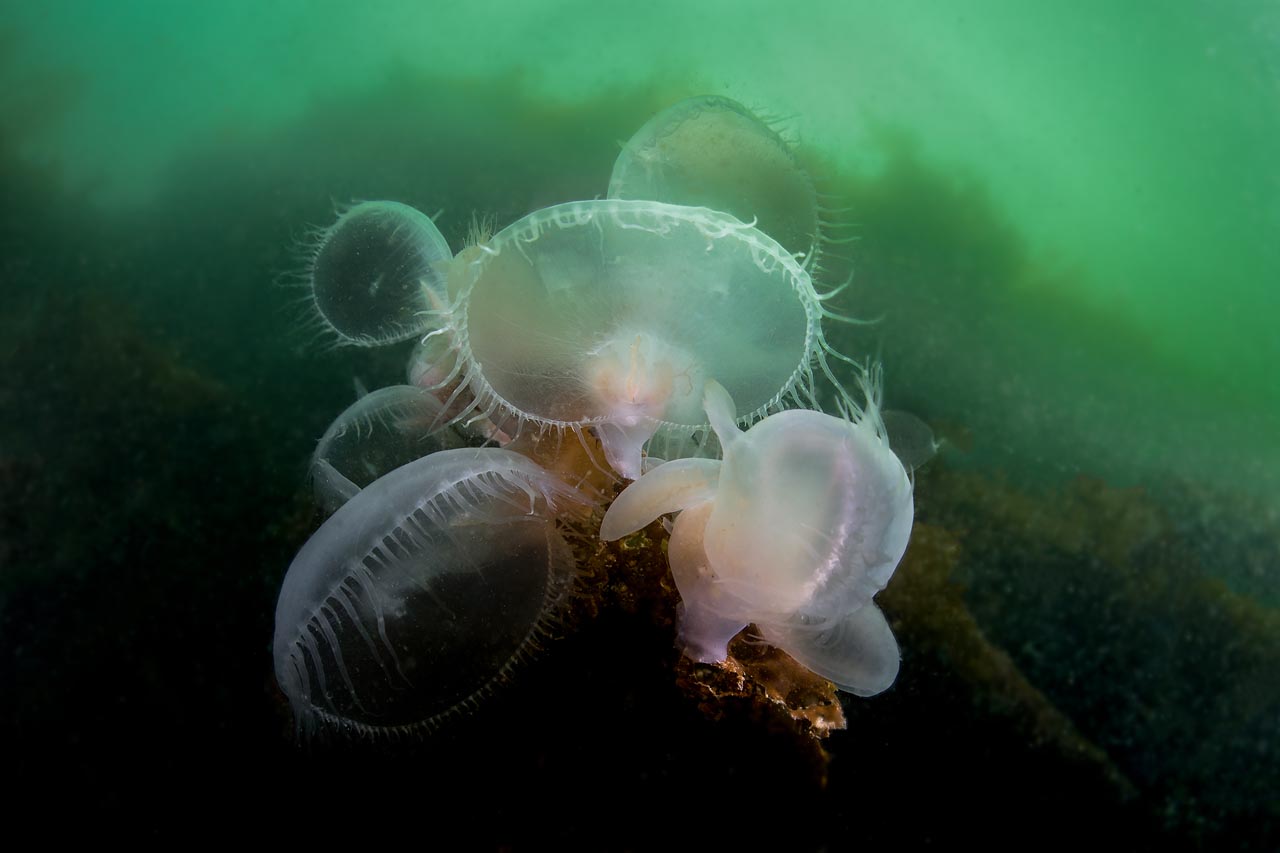
This is where God’s Pocket separates itself. The sheer biomass and visual density can be overwhelming in the best possible way, with walls and reefs that feel crowded with life.
10/10
When you dive here, the system feels intact. The richness of life, reef cover, kelp, invertebrate density, and overall condition of the underwater environment are what make this place so memorable.
🎖️ Master
Best for experienced cold-water divers who are confident in a drysuit, comfortable with current and variable visibility, well weighted and trimmed, and prepared for remote logistics, tide-driven dive planning, boat procedures, and demanding surface conditions.
Beginner
Advanced
Expert
Master
One of the most rewarding cold-water dive trips you can do
God’s Pocket sits off Port Hardy on the north end of Vancouver Island, in a part of British Columbia that has earned its reputation the hard way. This is not easy tropical diving. It is colder, darker, more physical, and more conditional. But for the right diver, it is extraordinary.
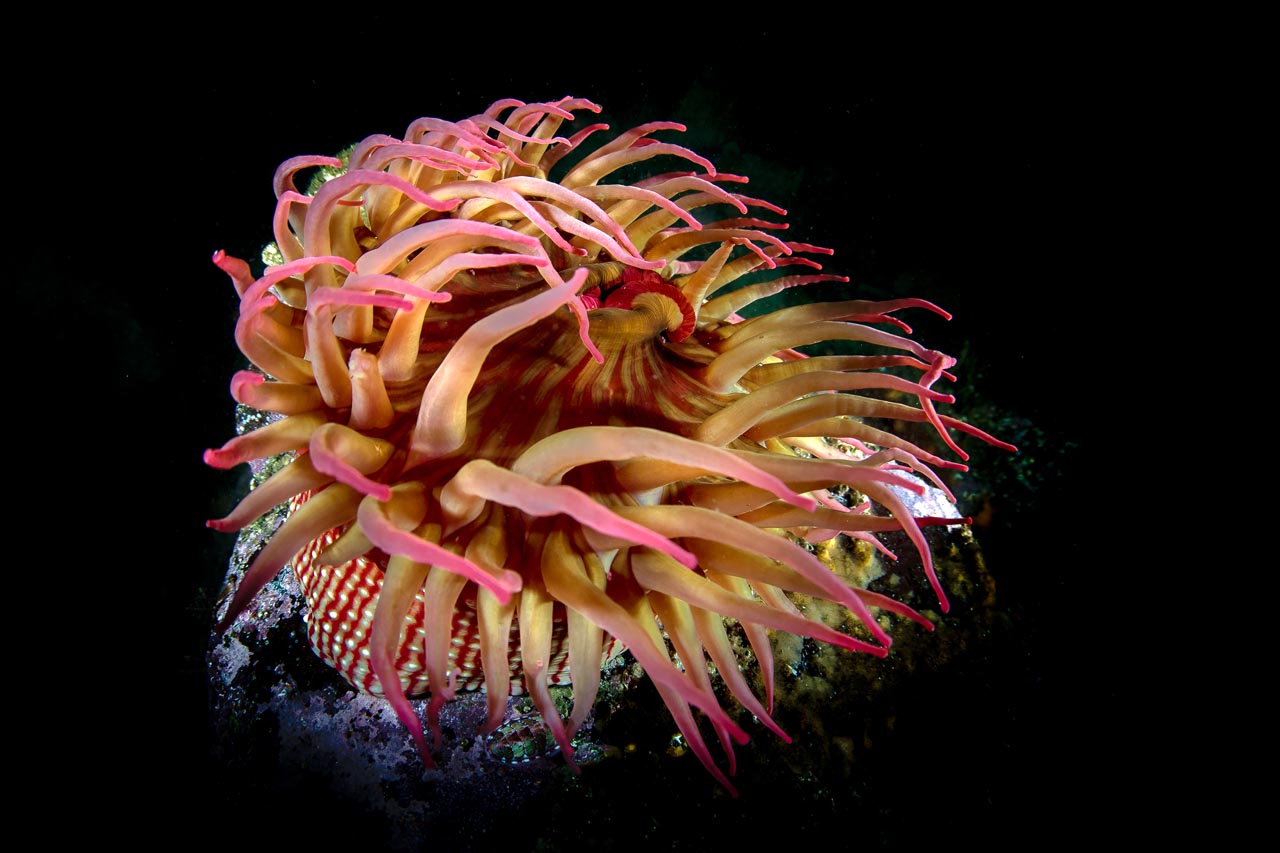
The current-fed waters around Hurst Island and Browning Pass create exactly the kind of nutrient-rich environment that makes cold-water diving so compelling. Everything grows with scale. Anemones, sponges, soft corals, kelp, fish life, and the overall visual weight of the underwater world all feel amplified.
What makes God’s Pocket special is not only that the diving is world class. It is that the whole trip feels immersive. You are away from noise, away from traffic, and away from the usual interruptions. You settle into the rhythm of tides, weather, boats, drysuits, warm meals, camera prep, and the next dive.
Cold-water image making at its most atmospheric
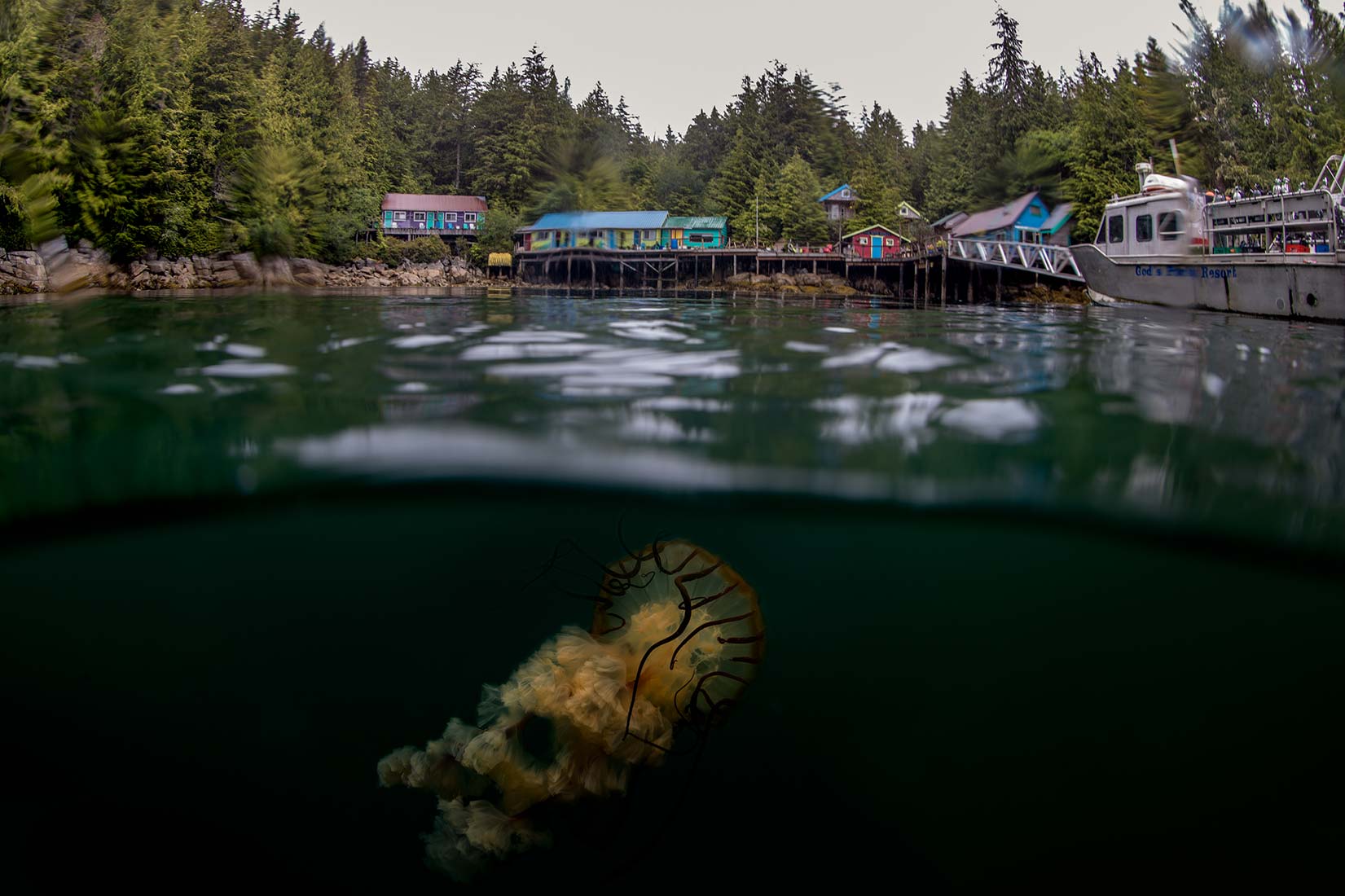
God’s Pocket is a destination for underwater photographers who want images with texture, structure, mood, and biological density. It is one of the rare places where cold water does not just feel interesting. It feels visually loaded.
Wide-angle is the natural strength. Browning Wall and the surrounding sites can give you giant white plumose anemones, bright yellow sulphur sponges, fields of life, schooling fish, kelp, and reef structure that feels built for dramatic composition. When visibility behaves, it can be spectacular.
Macro is there too, but this is not really a critter-first destination in the Lembeh sense. God’s Pocket is better understood as a place where the frame is often crowded with life, movement, colour, and texture.
It rewards photographers who can work calmly in cold water, manage current, hold position, and compose through complexity. The best images here do not feel manufactured. They feel discovered.
The dives that define God’s Pocket
The signature cold-water wall dive
This is the site most people associate with the region. It is dramatic, life-covered, and one of the clearest expressions of why divers speak about God’s Pocket with such loyalty. Think vertical structure, dense invertebrate life, colour, atmosphere, and the possibility of extraordinary wide-angle frames.
Life, colour, and current-fed reef structure
A strong example of what the area does so well: dense marine growth, excellent photographic texture, and a feeling that the reef is completely switched on. It is a good site for divers who like cold-water scenes with both structure and biological weight.
Advanced, energetic, and unforgettable
Not always available, and never casual, but this part of the region represents the kind of high-energy cold-water diving that has made the area legendary. Conditions matter here, and the decision to dive should always follow local judgment and tide timing.
Classic North Island richness
A site that captures the abundance and visual layering that makes this region so strong for repeat dives and repeat visits. It can offer the kind of cold-water complexity that rewards slow, controlled, attentive photography.
Cold-water biodiversity at full strength
Another favourite for reef life, colour, and the kind of visual density that makes even simple subjects feel elevated. It is a strong example of how much life these current-fed systems can support when conditions align.
Conditions-driven diving with real substance
Like much of the region, this is a place where tides, weather, and current matter. When it is on, it reinforces exactly why the north island has such a strong reputation among serious cold-water divers.
God’s Pocket Resort
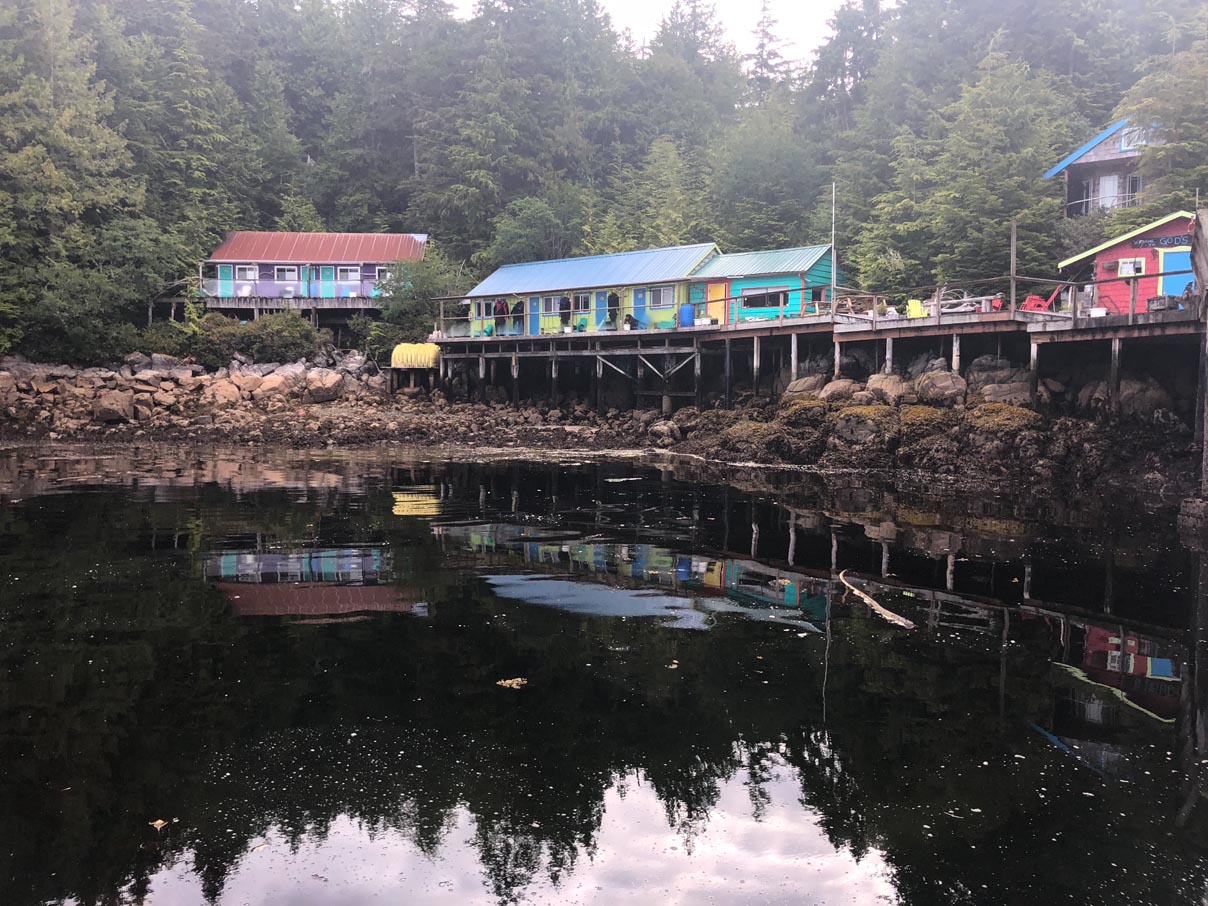
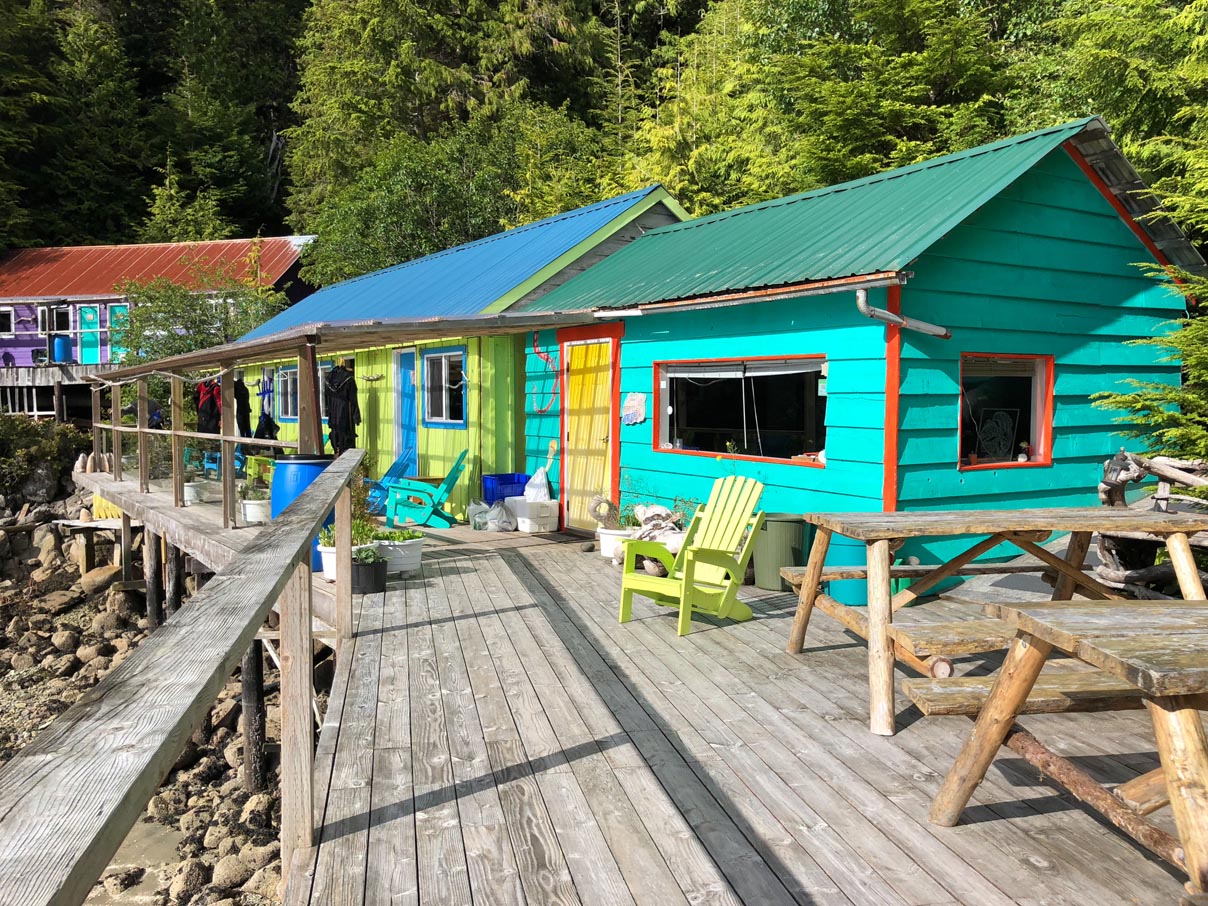
God’s Pocket Resort is the obvious base for this trip. It is an off-grid lodge in a protected bay on Hurst Island, accessible only by boat or seaplane, and it puts you close to Browning Pass and the wider network of dive sites that make this area famous.
The appeal is not luxury in the conventional sense. It is access, atmosphere, and focus. You are there to dive a serious cold-water system, and the resort is designed around that. Days are structured around conditions and tides, with the dive operation choosing sites according to what will be best and safest at the time.
The rhythm is part of the value: boat dives, warm meals, camera work, surface intervals, and a remote island setting that keeps you close to the experience. Between dives, the resort gives you forest, wildlife, shorelines, and the feeling that you have stepped away from the normal pace of things. That suits this kind of destination perfectly.
Getting there and what to expect
Most trips begin with travel to Port Hardy at the north end of Vancouver Island. From there, God’s Pocket transfers guests by boat out to Hurst Island. The remoteness is part of the value. You are not diving beside a town. You are stepping into a marine environment that still feels genuinely wild.
This is a drysuit destination, and it should be approached that way. Cold water, current, variable visibility, tide timing, and boat-based cold-water procedures are all part of the experience. It is not difficult because it is fashionable to say so. It genuinely asks more of the diver than many warm-water destinations do.
For photographers, this means planning carefully. Bring cold-water-tested gear, redundant warmth, stable buoyancy, a setup you can operate with thick gloves, and enough comfort in the water that the conditions do not consume all your attention. That is also why the trip is so rewarding. For experienced divers and photographers, the combination of access, marine life, and raw coastal beauty is hard to match.
Choose your window based on visibility, conditions, and what kind of trip you want
God’s Pocket can be exceptional across the season, but conditions matter. Spring and fall are often especially attractive for divers who are hoping for stronger visibility and cleaner photographic water, while summer can still be excellent and often brings a very full overall wildlife experience.
The main thing to understand is that this is not a place you judge only by calendar. Weather, current, plankton, and tide timing all shape the trip. Some visits will favour visibility. Others will favour raw biological richness. Either way, the diving tends to feel alive.
If your main priority is underwater photography, it is worth thinking carefully about what kind of images you want most. For cleaner wide-angle water, visibility matters. For a broader coastal experience, wildlife, weather, and the surface rhythm of the trip may matter just as much.
Ideal for experienced drysuit divers and underwater photographers who want substance
God’s Pocket is best for divers who are already comfortable in a drysuit and who enjoy conditions that demand attention. This is not a beginner resort trip. It is a destination for people who want strong diving rather than easy diving.
It is especially well suited to underwater photographers, repeat cold-water divers, people who love British Columbia’s coastal ecosystems, and travellers who are willing to trade convenience for access to something much more distinctive.
If you want a soft entry to scuba travel, start somewhere else. If you want one of the most memorable cold-water dive experiences in the world, God’s Pocket belongs high on the list.
A place that still feels ecologically intact
Part of what makes diving off Port Hardy so impressive is that it still feels full. The walls are crowded with life. The kelp forests still feel wild. The fish life and invertebrate density create the sense that this ecosystem is functioning the way a diver hopes a cold-water system will function.
There is also a strong local ethic around respecting the underwater environment. This is not a destination that should be treated casually. The cold-water communities here are fragile, visually extraordinary, and part of what makes the entire region so special.
That respect matters. It is one of the reasons the area still delivers the kind of diving that earns loyalty rather than just a single visit. Careful buoyancy, good trim, patient photography, and a light touch are not optional here. They are part of the responsibility of diving somewhere this rich.
Images from the trip
Want to experience this destination more deeply?
Explore upcoming trips or view a curated gallery of digital prints inspired by this destination.